
The chancellor’s proposed income tax shuffle is clever accountancy but toxic politics — a pledge-break disguised as fiscal discipline, and proof that Labour has trapped itself in rules it cannot escape.
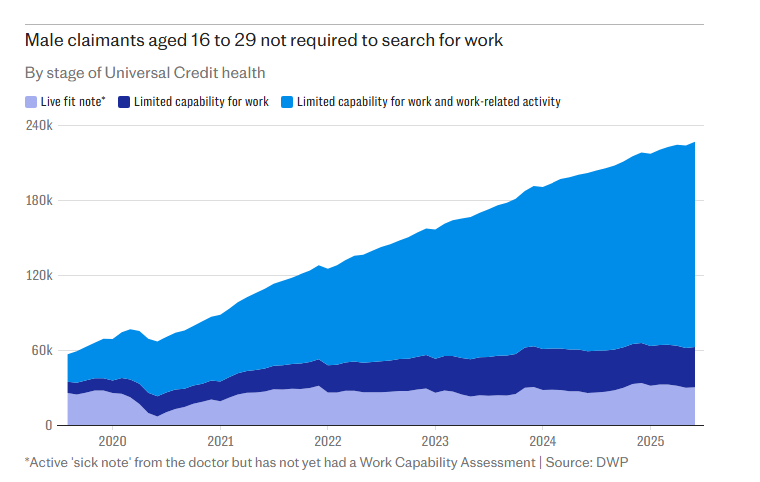
More than 200,000 young men aren’t “signed off for life”—they are the reserve army of labour, conscripted into the Telegraph’s morality tale to prepare the ground for austerity.
David Frost calls it a new “Red Terror.” The truth is plainer: it’s the Right’s wars, coups and crackdowns that have spilt the deepest blood in politics.

Trump’s latest “kinetic strike” killed three unknown Venezuelans he labelled “narco-terrorists.” The phrase is not law but incantation, a word that strips away humanity and legitimises killing. From Vietnam body counts to Obama’s “signature strikes,” America has always named its enemies into existence, and into death.
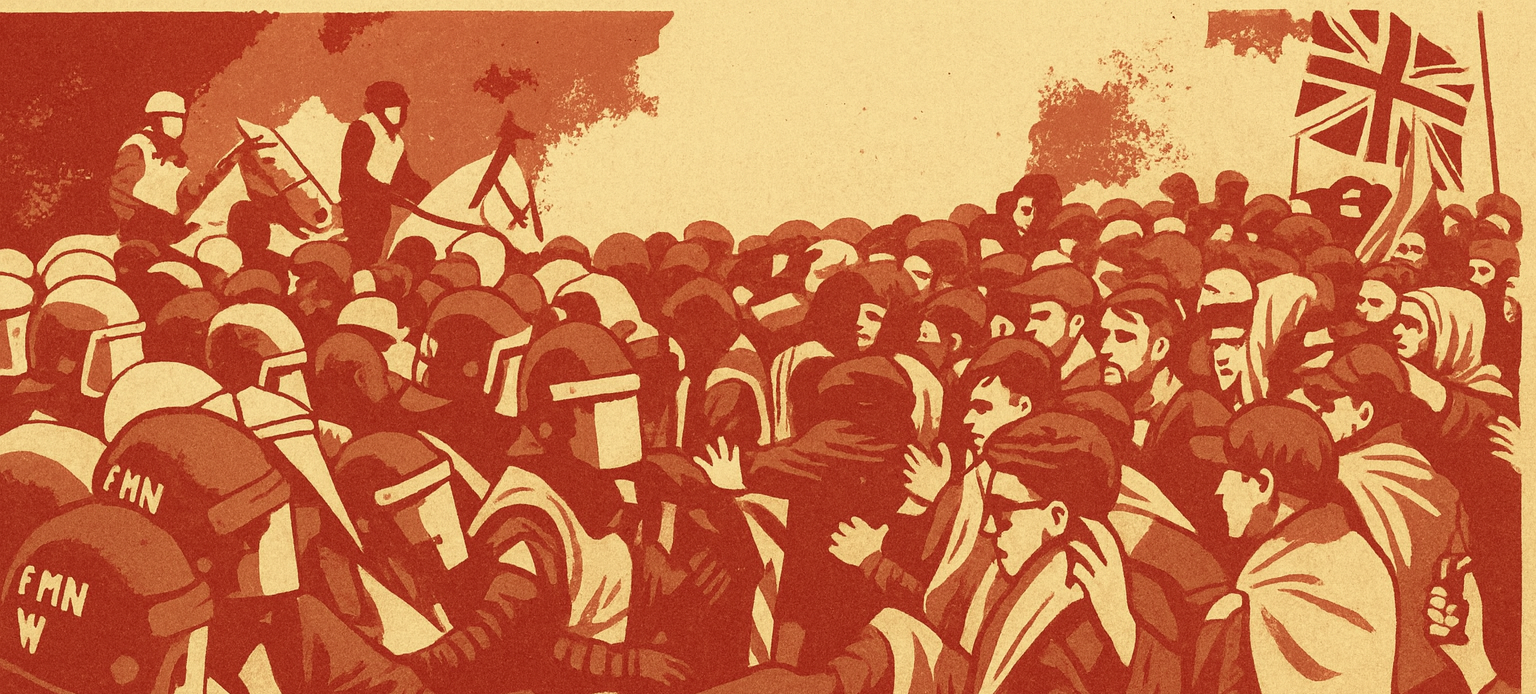
To call Robinson’s rally “populist” or “right-wing” is to miss the point. Fascism doesn’t require every marcher to be a coherent ideologue; it requires a mass, a scapegoat, and leaders prepared to turn grievance into violence. That is what we saw in London.
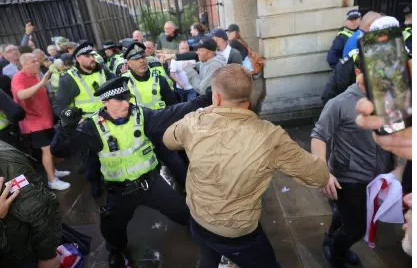
The events of Saturday (13/09) prove that Britain can go fascist. Musk calls for violence, the Telegraph and Times launder his words, and Starmer clings to the flag. We must name the danger or watch it grow.
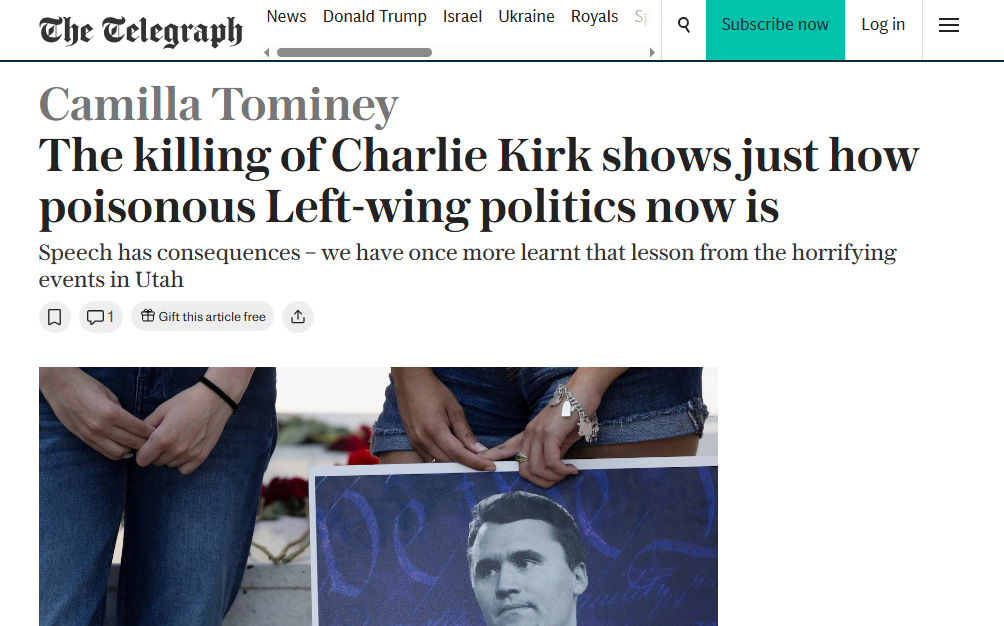
Camilla Tominey’s sainthood act for Charlie Kirk trades politics for piety. The Right already owns the machinery (press, finance, courts, police) and Kirk was part of the drive shaft. A death certificate doesn’t wash clean a career built on making violence respectable.
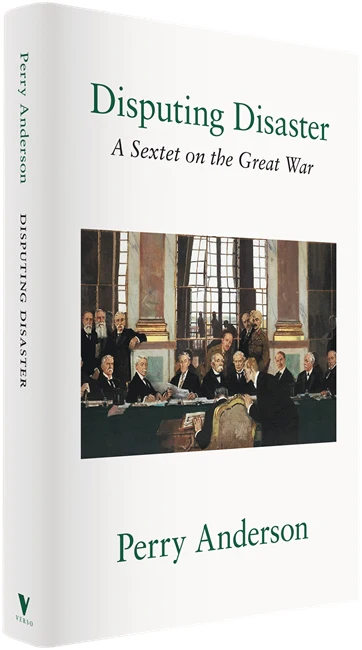
Histories of 1914 and the start of the First World War continue to proliferate, yet few reflect on how those histories themselves have been shaped. Perry Anderson’s Disputing Disaster is a forensic examination of how the war’s origins have been written, but what does it omit?
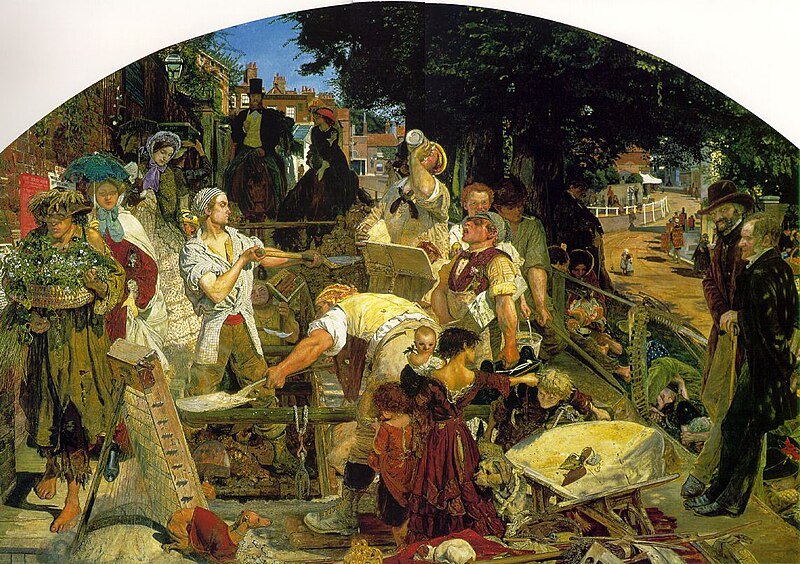
The idea that work is a moral duty rather than a means of survival is so deeply ingrained we rarely question it. But as technology advances and work becomes more precarious, exhausting, and intrusive, it is worth asking why productivity remains the measure of a person’s worth.

Peterborough lies on the edge of the Fens, a city without hills, shaped by wind that moves unhindered across the flatlands. It is a place that resists definition, constantly reshaped, rebuilt, and erased, where history lingers in fragments and memory holds more permanence than the streets themselves.
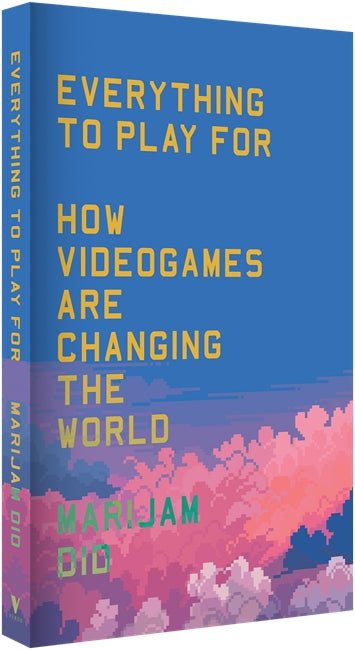
A whip smart and urgent examination of videogames as both a cultural force and a political battleground, Everything to Play For interrogates the industry’s contradictions: its creative potential, its exploitative labour practices, and its uncertain future in the age of AI.
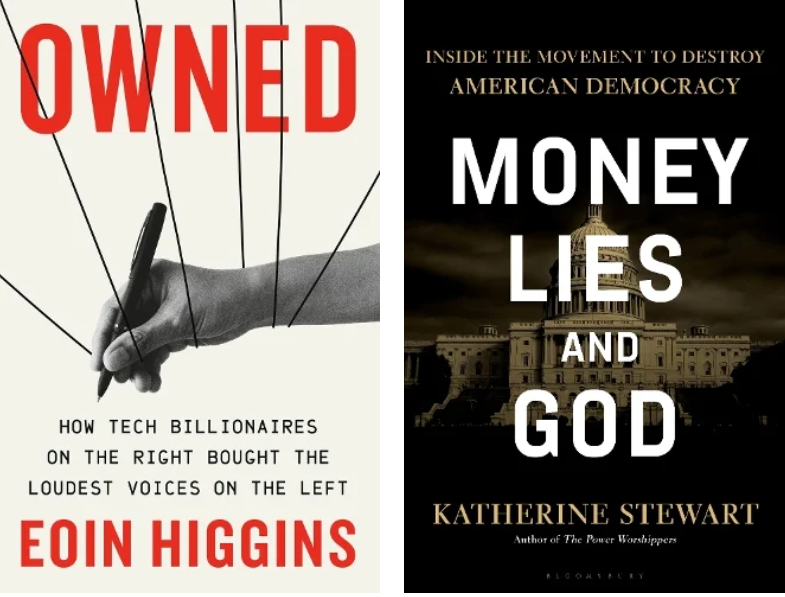
The consolidation of reactionary power in the United States is not accidental or chaotic but the result of a long-term, well-funded strategy to entrench minority rule, an argument laid bare in Owned by Eoin Higgins and Money, Lies, and God Behind the Movement to Destroy American Democracy by Katherine Stewart.

Trumpism and Putinism are reshaping the global order, through a new brand of reactionary nationalism. As the world looks more unstable, the left cannot afford to rely on old slogans or abstract theory, because when bombs fall and occupations expand, resistance is not a thought experiment.
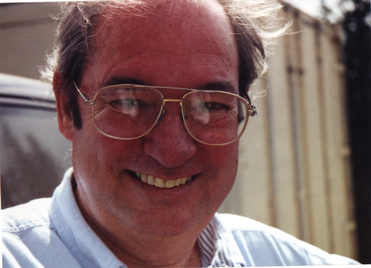
Few books have shaped the conspiratorial mind like Behold a Pale Horse, and in Pale Horse Rider: William Cooper, the Rise of Conspiracy, and the Fall of Trust in America, Mark Jacobson unpacks the strange, sprawling legacy of its author, William Cooper, a man who saw the deep state before it had a name, predicted 9/11, and died in a shootout with police. But was he a prophet, a fraud, or just another victim of his own paranoia?
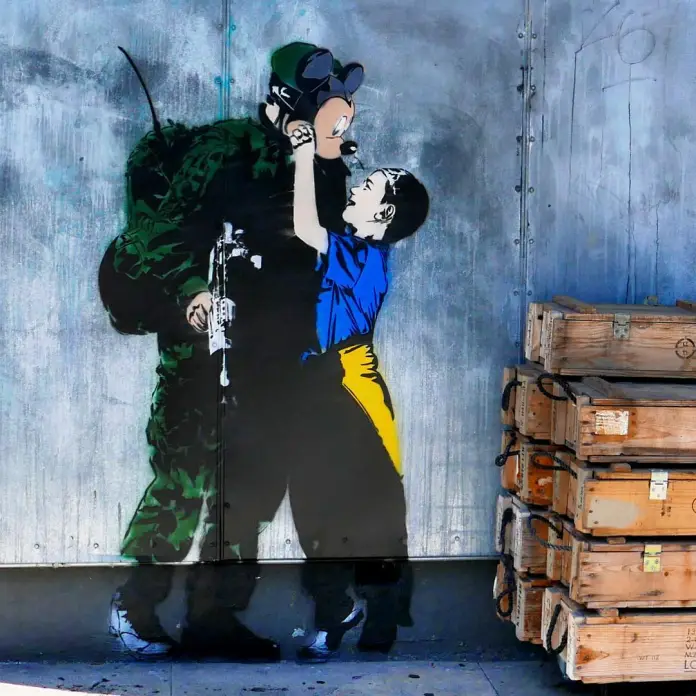
As global tensions intensify and militarism gains momentum, how do we maintain principled opposition to war while effectively confronting authoritarian threats? Reflecting on recent debates, I explore the urgent need for genuine internationalist solidarity.
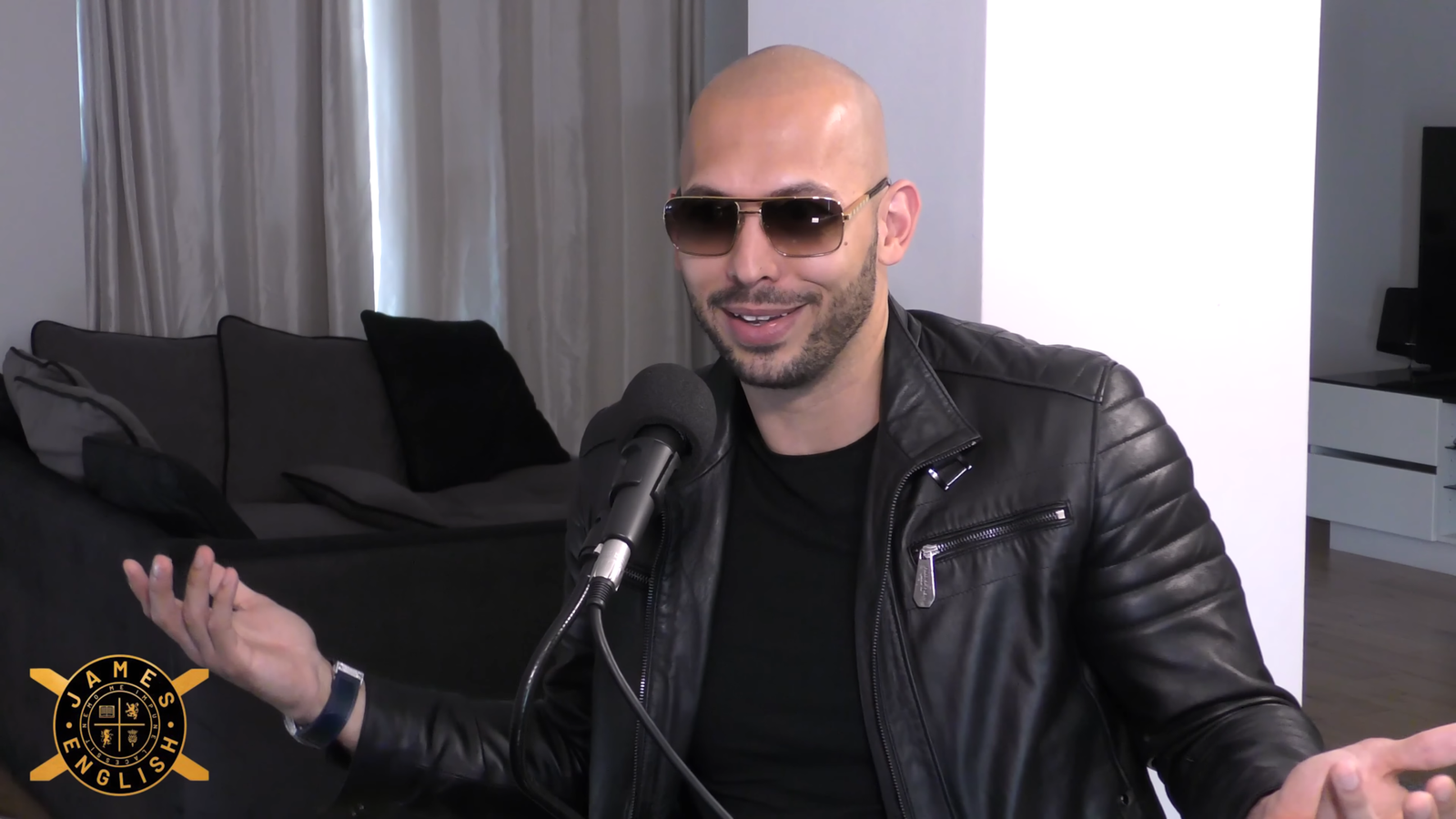
In the face of Andrew Tate’s return and his seductive brand of toxic capitalism, the left urgently needs to offer more than critique, we need a strategy to win back the young men he preys upon.
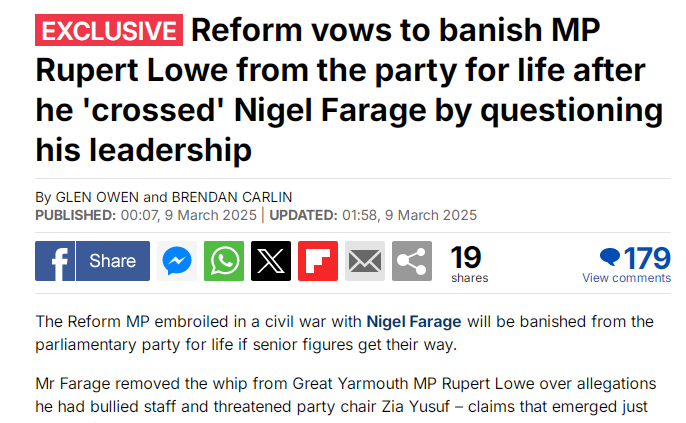
Reform UK has never run so much as a parish council, yet it styles itself as a government-in-waiting. Now, amid internal purges and power struggles, the contradictions of Faragism are laid bare.