The chancellor’s proposed income tax shuffle is clever accountancy but toxic politics — a pledge-break disguised as fiscal discipline, and proof that Labour has trapped itself in rules it cannot escape.
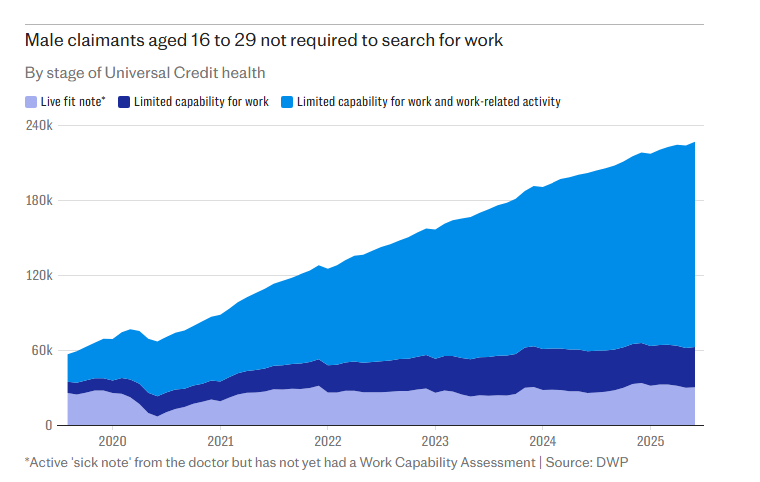
More than 200,000 young men aren’t “signed off for life”—they are the reserve army of labour, conscripted into the Telegraph’s morality tale to prepare the ground for austerity.
David Frost calls it a new “Red Terror.” The truth is plainer: it’s the Right’s wars, coups and crackdowns that have spilt the deepest blood in politics.

Trump’s latest “kinetic strike” killed three unknown Venezuelans he labelled “narco-terrorists.” The phrase is not law but incantation, a word that strips away humanity and legitimises killing. From Vietnam body counts to Obama’s “signature strikes,” America has always named its enemies into existence, and into death.
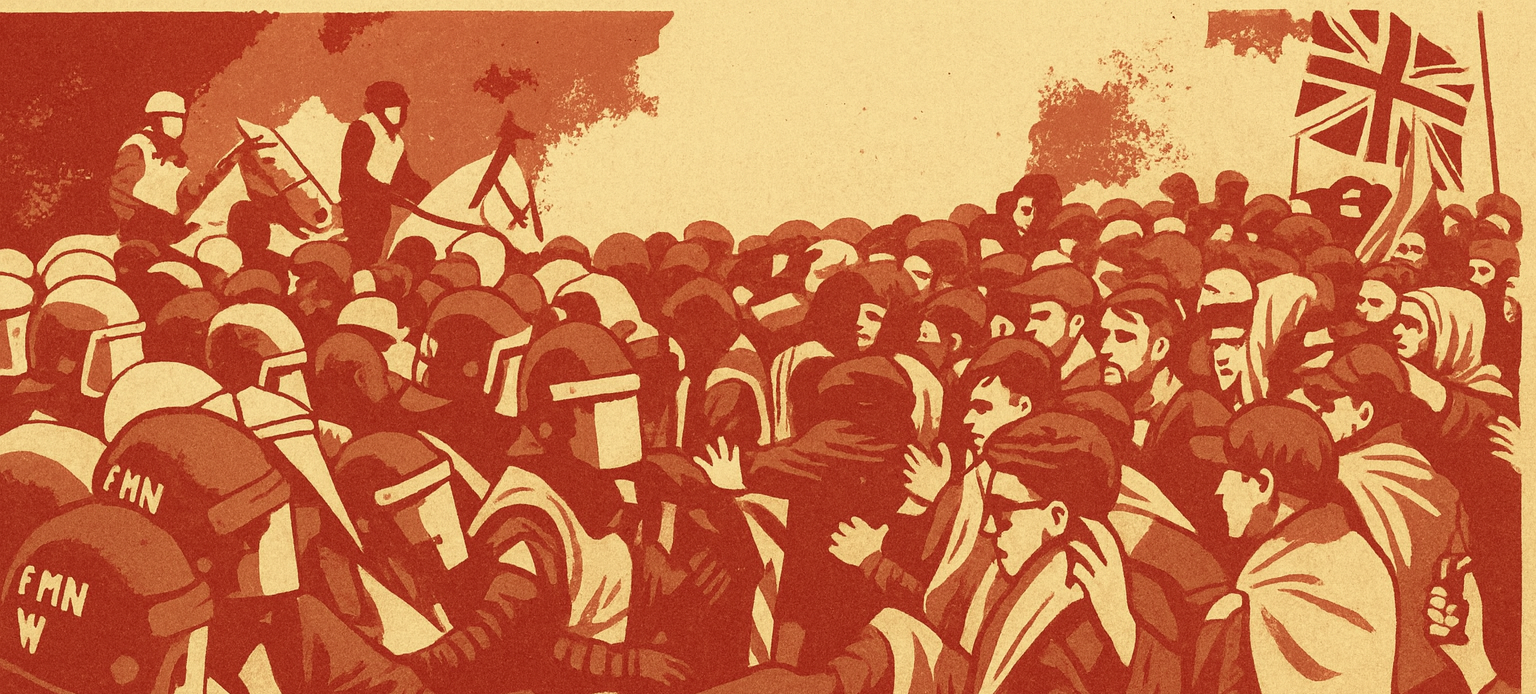
To call Robinson’s rally “populist” or “right-wing” is to miss the point. Fascism doesn’t require every marcher to be a coherent ideologue; it requires a mass, a scapegoat, and leaders prepared to turn grievance into violence. That is what we saw in London.
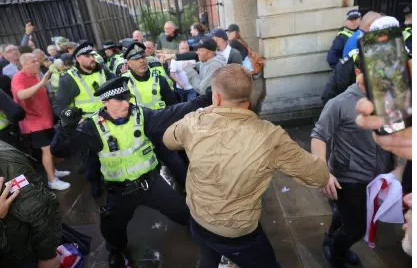
The events of Saturday (13/09) prove that Britain can go fascist. Musk calls for violence, the Telegraph and Times launder his words, and Starmer clings to the flag. We must name the danger or watch it grow.
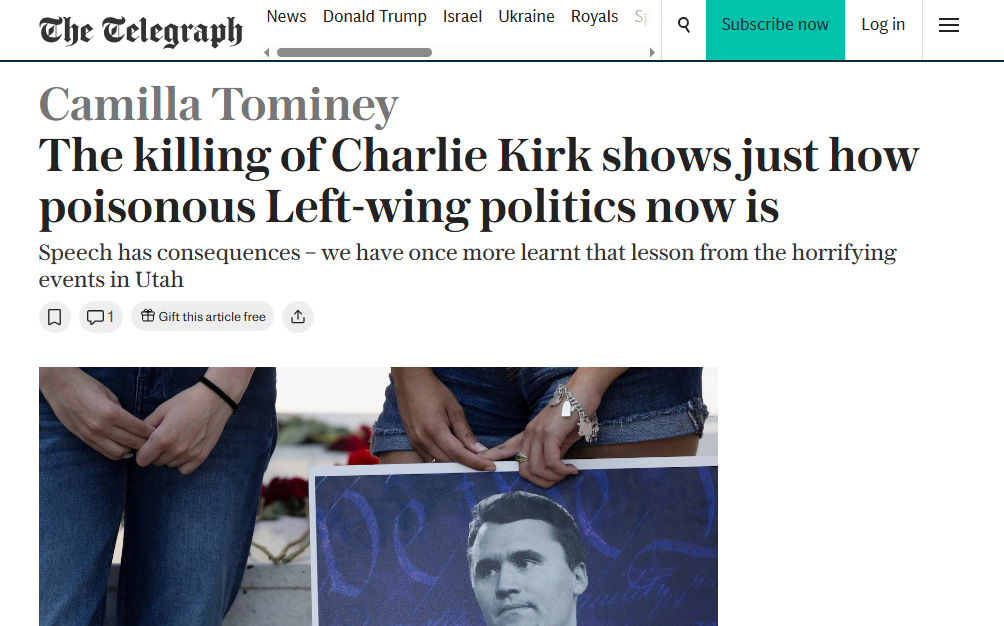
Camilla Tominey’s sainthood act for Charlie Kirk trades politics for piety. The Right already owns the machinery (press, finance, courts, police) and Kirk was part of the drive shaft. A death certificate doesn’t wash clean a career built on making violence respectable.

On a seemingly ordinary Thursday, at the time-honoured Glyndebourne opera festival, an unexpected interlude of protest emerged. In the sanctuary of the arts, amid the melody of Francis Poulenc’s Dialogues des Carmélites, a dissenting chorus brought the opera to a standstill. Sparked by the cause of Just Stop Oil, the interruption blended a traditional form of high culture with the pressing concerns of our era. This is the narrative of that day, a symphony of dissent resounding from the grand opera house to the streets of London.

As we delve deeper into the tumultuous seas of the 21st century, the airwaves have become a battleground for the soul of society. One such combatant, GB News, has emerged as a rallying point for reactionary rhetoric, a stark contrast to the march of progressive values. Let’s dissect the ways in which GB News stands as a barrier to our shared vision of a more equitable, inclusive, and just society.

In the vanguard of dissent, demanding justice, a new breed of rebels is rising, and their fight is our fight. Their actions carry the echoes of a movement that stood firm in the face of oppression more than a century ago—the Suffragettes. Today, we draw parallels between these trailblazers and the Just Stop Oil protestors, not to dilute the significance of either struggle but to highlight the enduring power of civil disobedience in the quest for justice.

Here we delve into the radicalisation of former Conservative Member of Parliament, Andrew Bridgen, and his alignment with right-wing populist ideologies. Highlighting the pivotal role of disinformation networks and socio-economic factors, we explore the concerning trend of right-wing radicalisation in the UK, its implications for democracy, and potential countermeasures.

In a world increasingly captivated by images and representations, the British monarchy finds itself at the epicentre of a growing debate on the role of such institutions in a modern democratic society. As the United Kingdom prepares for the coronation of a new king, it is essential to examine the monarchy’s relevance and compatibility with the values of democracy, fairness, and social justice that define the aspirations of a progressive nation.
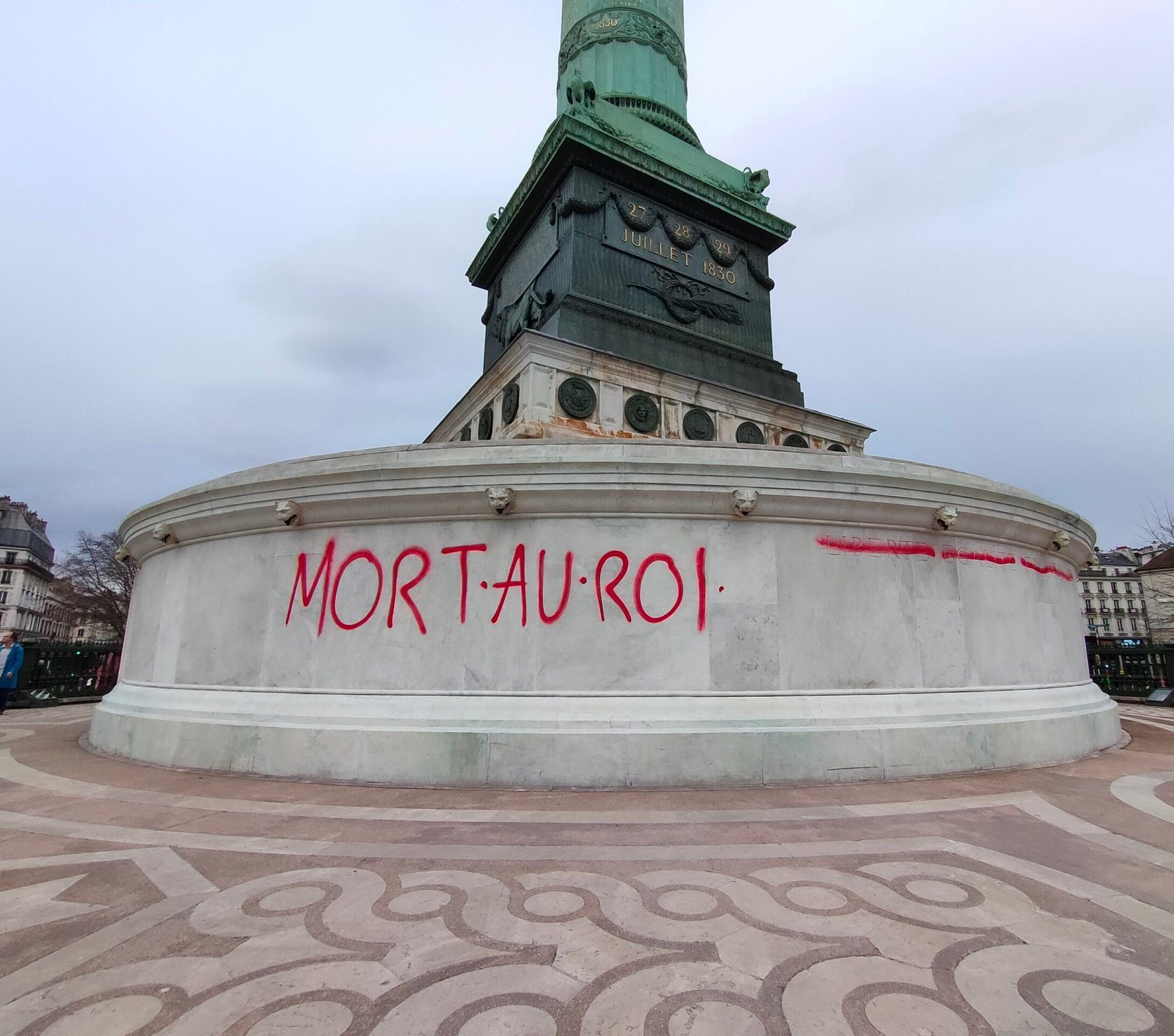
In the twilight of a kingdom, the coronation of King Charles, a stage set to display the shimmering façade of liberty, while the UK government hastens its grip on the throat of protests

Amidst the relentless hum of an oppressive state, the silenced voices emerge, defiant whispers cutting through the smoke of the Molotov, a testament to the indomitable spirit of resistance.

May Day, a day of struggle and sacrifice, a day of hope and defiance, a day for the working class.

In a world reminiscent of Kafka’s nightmares, the arrest of a French publishing executive has cast a long, ominous shadow over the fragile nature of free expression. Ernest, the foreign rights manager for Éditions la Fabrique, found himself entangled in the suffocating coils of the state’s overreach as he was arrested. This ensnarement occurred at the behest of the French government, employing British anti-terror legislation as their instrument of control.

In the cold depths of the cosmos, the saga of Star Wars unfolds, a timeless allegory of proletarian emancipation waging an epic battle against the dark tide of fascism.